John Fellows
Pamela's WarJohn Fellows, usually known to his friends as Jack, is the young man whose determined courtship of Pamela transforms a wartime acquaintance into a lasting family bond. He first appears among the young men visiting The Woodman Hotel, but his importance soon exceeds that of a casual customer: he breaks off an existing engagement to pursue Pamela, remains intent on making her his partner through bombing and separation, marries her before his posting, and becomes the father of their two children. His decisive arc is marked by both achievement and frustration, because enlistment brings him closer to the flying career he desires only for an eye test to close that path permanently.
Identity and Background
John is initially a civilian worker rather than a serviceman. He is employed at a local factory making aeroplanes, and his work places him within the national war effort even before he formally joins the armed forces. Aircraft construction gives him a practical connection with aviation, but it does not satisfy him: although he enjoys building planes, he would much rather fly them. That distinction defines an early tension in his character. He contributes to the machinery of war while aspiring to occupy its more perilous and glamorous position in the air.
His family is also connected to wartime service and technology. John’s father, an accountant at the local steel works Stuarts and Lloyds, is secretly involved in preparing the costing for PLUTO, the top-secret pipeline intended to carry fuel from England to France. John’s cousin Derek serves with conspicuous bravery, rescuing injured comrades from minefields and receiving medals before permanent disability follows from explosions. John therefore belongs to a family whose members contribute to the war in different ways: through industrial work, secret logistical planning, battlefield rescue, and eventually military service.
Meeting and Courtship
John’s appearance at The Woodman Hotel follows Pamela’s devastating separation from David, the young Royal Air Force man with whom she has fallen deeply in love. Pamela barely knows John and has rarely spoken to him, yet he immediately decides that she is the person for him. At the time, he is engaged to another woman serving in the Auxiliary Territorial Service, while he himself has not yet joined up. His decision to break off that engagement and begin pursuing Pamela gives his courtship an abrupt, forceful quality: he does not wait for a long acquaintance to confirm his feelings, but acts upon an immediate conviction.
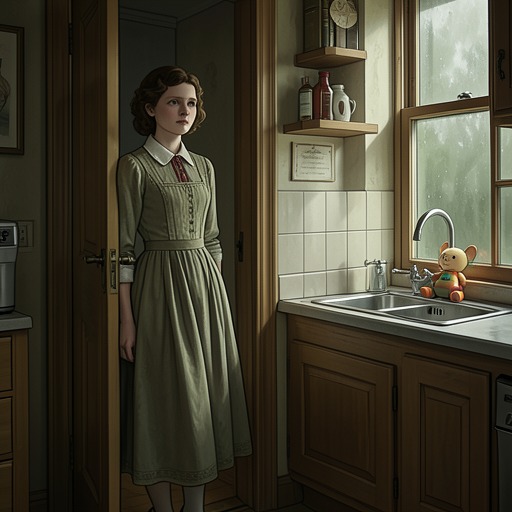
The relationship develops under the restrictions imposed by Pamela’s Father. Surrounded by servicemen and other young visitors, Pamela is forbidden to walk out of the hotel or onto the car park with them and is never supposed to be alone with a young man. These rules make the hotel both a social meeting place and a controlled domestic territory. John’s pursuit must therefore pass through the family’s surveillance, just as his later movement through the war will be governed by military orders.
John’s determination is made visible when he comes to Pamela’s new home after her family leaves The Woodman Hotel for a top-floor mansion flat near Birmingham city centre. He borrows his brother Rex’s motorbike without asking and rides to see her despite the increasing danger of German bombing. The gesture is reckless, but it also establishes the persistence that distinguishes him: the risk of the journey does not weaken his resolve to make Pamela his girl.
Their courtship reaches a crucial stage during an evening meal in the hotel’s upstairs dining room. After Pamela serves dinner to John and his friends, the tables are pushed back and John sweeps her into a dance. Pamela, still seventeen, sees him as the man with whom she wants to spend the rest of her life; John is twenty-four, and he tells her that his feeling is shared. At the end of the evening, despite her Father’s strict supervision, she is allowed onto the car park to say goodnight. They kiss once while his friends wait in the car, promise to take care of themselves, and part under the immediate pressure of wartime uncertainty. Pamela does not know that circumstances will soon prevent John from keeping his side of the promise.
War, Danger, and Commitment
John’s courtship continues into the family’s move from the countryside to Birmingham. The new flat is elegant and spacious, but the city is being bombed nightly, and the family has left the relative safety of rural life for a dangerous urban setting. John’s visit comes shortly before the Germans arrive in force. When the residents cannot reach the air-raid shelter and gather instead on the ground floor, Pamela’s Father orders everyone onto the floor with their hands over their ears. The measure saves their lives: later inspection shows that most of the shrapnel holes are at waist or head height, where anyone standing would have been struck.
The night’s survival changes the emotional circumstances of John’s pursuit without immediately securing Pamela’s consent. He chooses this moment to propose marriage, but Pamela declines because she feels that she barely knows him. The refusal is important because it prevents danger from automatically becoming intimacy. Shared survival creates a bond, but Pamela still distinguishes between gratitude, shock, and the knowledge required for marriage. John’s persistence therefore meets a genuine boundary rather than an effortless romantic reward.
The following morning, John’s brother Rex arrives furious because John has taken his motorbike without permission and has been unable to return it before its absence was noticed. The bombs have interrupted John’s plan, turning a private romantic errand into part of the night’s wider disorder. John’s personal determination is thus repeatedly entangled with the material disruptions of war: transport is borrowed, shelters are inaccessible, homes become unsafe, and ordinary plans are overturned by explosions.
Enlistment and the Failed Flying Ambition
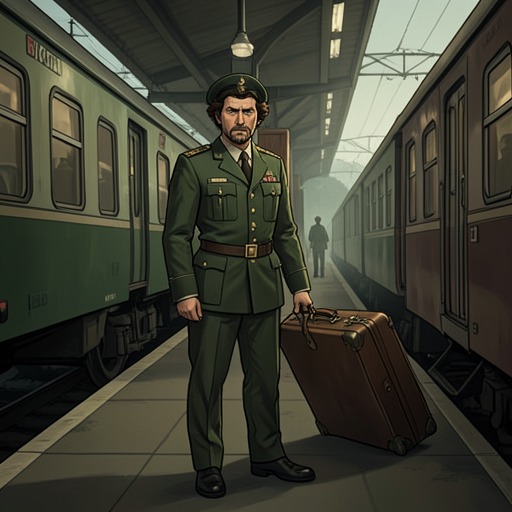
John’s desire to fly eventually leads him to enlist. Before joining the services, he has been occupied with constructing aircraft; after enlisting, his Royal Air Force training begins in Scotland. The move represents a major threshold in his life. He is no longer merely supporting aviation from the factory floor but entering the institution whose aircraft he has wanted to fly. At the same time, his enlistment helps produce a new crisis for Pamela and her family, who become homeless while he is away.
John returns from Scotland during Pamela’s miserable period in the aircraft factory, where she performs a man’s job among hostile male workers while receiving only a woman’s rate of pay. His return brings news that he is to be posted to Canada for further training. The announcement appears to bring his ambition within reach. It also creates the urgent practical condition for the couple’s marriage: there is little time before he must leave, so the wedding has to be arranged at short notice with a special licence.
The hoped-for future collapses soon after the wedding. An eye test reveals that John is colour-blind and cannot distinguish between green and blue, a failure that could prove lethal for a pilot and crew because it confuses land and sea. His dream of flying is consequently shattered. The reversal is especially cruel because enlistment and overseas training had seemed to be carrying him toward success. John can serve the war effort, but he cannot serve it in the role he most desires.
Marriage and Family
John and Pamela marry at St Kenelm’s Church, Romsley, before his anticipated departure for Canada. Because they live in Halesowen rather than within the church’s official catchment area, the wedding requires a small deception: a suitcase of clothes is delivered to the home of a willing local resident so that Pamela can qualify as resident in the village. The improvised arrangement reflects the pressures of wartime marriage, when regulations, shortages, and military postings compress private decisions into a narrow interval.
The wedding itself is modest and carefully assembled from what wartime conditions permit. Pamela wears a pale blue woollen Berketex suit, a tan hat and shoes, and a corsage of pink roses rather than a white dress. John appears in his Royal Air Force uniform. Pamela’s Mother approves of him and enjoys his company, while Pamela’s Father is reluctant to lose his daughter and repeatedly tells her, during the drive to the church, that she can still instruct the taxi to turn around. Pamela refuses that escape and becomes Mrs Pamela Edith Fellows little more than half an hour after arriving.
The celebration is marked by comic mishap as well as affection. Pamela’s Mother, affected by champagne, signs the register in her maiden name and loudly announces the mistake to the congregation and guests. With no colour film available, the couple’s photographs are hand-coloured; the result makes their faces and hands as pink as the roses on Pamela’s corsage, leaving them looking like cooked prawns. Pamela rejects the photographer’s reassurance that the colour will fade and insists that the images be redone in black and white. These details keep the marriage from appearing as a ceremonially perfect conclusion: it is a hurried, improvised, embarrassed, and deeply personal beginning.
After a wedding breakfast at the Lyttleton Arms in Hagley, the couple discover that the taxis have been sent away by mistake and walk two miles to the railway station at Stourbridge. They travel by train to Worcester for a honeymoon lasting only two nights before returning to Pamela’s parents’ home. John then goes back to Scotland, expecting to continue toward Canada. The marriage therefore begins under separation rather than domestic stability, with no independent home and few possessions. Nevertheless, John and Pamela later have two children, and he becomes the man with whom Pamela spends most of the rest of her life.
Narrative Role and Significance
John embodies a wartime form of romantic persistence in which courtship, military service, housing insecurity, and family formation cannot be separated. His relationship with Pamela moves through pursuit, refusal, danger, marriage, and enforced separation rather than through a sheltered progression from meeting to settled domesticity. His proposal during the aftermath of an air raid is particularly revealing: catastrophe accelerates his desire for permanence, while Pamela’s refusal preserves her ability to judge the relationship on its own terms.
His character also complicates the heroic ideal associated with wartime aviation. He longs to fly, enlists, and begins training, but colour blindness removes him from the cockpit. The disappointment does not erase his earlier work building aircraft or the broader contribution made by his family, yet it exposes the difference between wanting a heroic role and being permitted to occupy it. John’s significance lies not only in the dream he loses but in the endurance of his attachment after that loss: the failed pilot becomes the husband and father at the centre of Pamela’s later life.